Mahatma Gandhi Biography
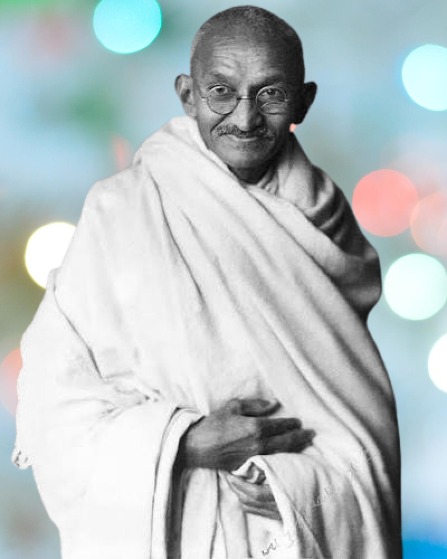
Mahatma Gandhi was one of the most influential leaders in India’s freedom movement. He is remembered around the world for his ideas of non-violence, truth, peace, and peaceful resistance. His simple lifestyle and strong belief in justice made him a respected leader among millions of people.
Gandhi played an important role in India’s struggle against British rule. Instead of encouraging violence, he promoted Satyagraha, a method of peaceful protest based on truth and non-violence.
Mahatma Gandhi Quick Information
| Information | Details |
|---|---|
| Full Name | Mohandas Karamchand Gandhi |
| Popular Name | Mahatma Gandhi |
| Also Known As | Bapu, Father of the Nation |
| Born | 2 October 1869 |
| Birthplace | Porbandar, Gujarat, India |
| Died | 30 January 1948 |
| Age at Death | 78 years |
| Profession | Lawyer, Freedom Fighter, Social Reformer |
| Education | Law, University College London |
| Wife | Kasturba Gandhi |
| Father | Karamchand Gandhi |
| Mother | Putlibai Gandhi |
| Famous For | Indian Independence Movement |
| Main Principles | Truth and Non-Violence |
| Major Movement | Quit India Movement |
| Nationality | Indian |
Early Life of Mahatma Gandhi
Mahatma Gandhi was born on 2 October 1869 in Porbandar, Gujarat. His full name was Mohandas Karamchand Gandhi. His father, Karamchand Gandhi, served as a senior government official in the princely state of Porbandar.
His mother, Putlibai, had a strong influence on his early life. Gandhi grew up with values such as honesty, self-discipline, simplicity, and compassion.
As a young man, Gandhi travelled to England to study law. He later returned to India and began working as a lawyer.
Mahatma Gandhi in South Africa
A major turning point in Gandhi’s life came when he travelled to South Africa in 1893 for legal work.
During his time there, he experienced racial discrimination. These experiences deeply affected him and encouraged him to fight against injustice.
Gandhi gradually developed his method of Satyagraha, which focused on resisting injustice through truth and non-violent action.
His experiences in South Africa later influenced the methods he used during India’s freedom movement.
Mahatma Gandhi and India’s Freedom Movement
Gandhi returned to India in 1915 and became increasingly involved in the country’s political and social issues.
He supported farmers, workers, and ordinary people who were facing difficult conditions. His approach was different from traditional political resistance because he encouraged large groups of people to participate through peaceful action.
Some of the important movements associated with Gandhi include:
- Champaran Satyagraha
- Kheda Satyagraha
- Non-Cooperation Movement
- Civil Disobedience Movement
- Dandi March
- Quit India Movement
Dandi March
The Dandi March of 1930 became one of Gandhi’s most famous acts of protest.
Gandhi and his followers walked from Sabarmati Ashram to the coastal village of Dandi to protest against the British salt law.
The movement attracted widespread attention and became an important part of the Civil Disobedience Movement.
Quit India Movement
In 1942, Gandhi and the Indian National Congress launched the Quit India Movement.
The movement demanded an end to British rule in India. Gandhi gave the famous call of “Do or Die”, encouraging Indians to continue their struggle for independence.
Gandhi was arrested along with many other leaders during the movement.
Gandhi’s Belief in Non-Violence
Non-violence was at the heart of Gandhi’s philosophy.
He believed that people could challenge injustice without using physical violence. For Gandhi, non-violence was not simply a political method but also a way of living.
His ideas influenced many people outside India as well, including later leaders and social activists who used peaceful resistance in their own movements.
Mahatma Gandhi and Social Reform
Gandhi’s work was not limited to India’s independence.
He also spoke about:
- Removal of untouchability
- Hindu-Muslim unity
- Rural development
- Cleanliness
- Self-reliance
- Promotion of Indian-made products
- Education and social equality
He encouraged Indians to use khadi and locally produced goods as part of the wider movement for self-reliance.
Mahatma Gandhi and Kasturba Gandhi
Gandhi married Kasturba Gandhi in 1883 when they were both very young.
Kasturba remained closely connected with Gandhi’s public and social work. She participated in India’s freedom movement and was imprisoned several times during the struggle.
They had four sons: Harilal, Manilal, Ramdas, and Devdas Gandhi.
Mahatma Gandhi’s Simple Lifestyle
Gandhi became famous for his simple way of living. He wore simple Indian clothing, lived with limited material possessions, and promoted self-discipline.
His appearance and lifestyle became closely associated with his message of equality and simplicity.
He spent much of his time travelling, meeting ordinary people, writing, praying, and working for social causes.
Death of Mahatma Gandhi
Mahatma Gandhi was assassinated on 30 January 1948 in New Delhi.
He was on his way to a prayer meeting when he was shot.
His death shocked India and many people around the world. Gandhi was 78 years old.
30 January is observed in India as Martyrs’ Day (Shaheed Diwas).
Mahatma Gandhi’s Legacy
Gandhi’s influence continued long after his death. His ideas about non-violence, peaceful resistance, truth, and social responsibility have been discussed and followed in different parts of the world.
He remains an important historical figure in India’s independence story.
His life also continues to be studied for the way he connected political action with personal discipline and social reform.
Mahatma Gandhi Short Biography
Mahatma Gandhi, whose full name was Mohandas Karamchand Gandhi, was born on 2 October 1869 in Porbandar, Gujarat. He studied law in England and later worked in South Africa, where his experiences with racial discrimination shaped his ideas about peaceful resistance.
After returning to India, Gandhi became one of the leading figures of the Indian independence movement. He led and supported several major campaigns, including the Non-Cooperation Movement, Civil Disobedience Movement, Dandi March, and Quit India Movement.
Gandhi strongly believed in truth and non-violence. He also worked for social reform, religious harmony, rural development, and self-reliance.
He was assassinated in New Delhi on 30 January 1948. Today, Mahatma Gandhi remains one of the most recognised figures associated with India’s struggle for independence.
Mahatma Gandhi Career Highlights
- Studied law in London
- Worked as a lawyer in South Africa
- Developed the idea of Satyagraha
- Returned to India in 1915
- Became a major leader of India’s freedom movement
- Led the Dandi March in 1930
- Played a major role in the Quit India Movement in 1942
- Promoted non-violence and social reform
- Worked for communal harmony and equality
- Became an internationally recognised symbol of peaceful resistance
10 Interesting Facts About Mahatma Gandhi
- His full name was Mohandas Karamchand Gandhi.
- He was born on 2 October 1869.
- He studied law in London.
- He spent several years in South Africa.
- His philosophy was strongly based on truth and non-violence.
- He developed the method known as Satyagraha.
- The Dandi March took place in 1930.
- Gandhi supported the Quit India Movement in 1942.
- His wife was Kasturba Gandhi.
- He died on 30 January 1948 in New Delhi.